Showing posts with label book reviews. Show all posts

Tuesday, August 21, 2012

C. S. Lewis penetrates another thick skull


Have you ever read through a book where you've had to set it down and just pant for a bit, perhaps roll your eyes and holler at a family member about some recent tidbit that finally penetrated your brain? They might nod their head and smile condescendingly, probably because it's the same concept they've been trying to explain to you for six weeks. The instant I finished G. K. Chesterton's Orthodoxy I simply had to run wild in the backyard, jumping on the trampoline, picking roses (bloody fingers to show for it), and swinging into the overgrown cherry trees. It was serious.

I listened to a lecture recently where the speaker was saying how we couldn't get away from language or words. But not because we're chained to the ABCs and semicolons. Spoken words and black scribbles are our wings to fly.
So, there...you should feel like a lunatic feather dancing around your backyard after you finish a good book. ;-)

I reread Mere Christianity this summer and I as I was tearing through I could barely believe I'd heard this stuff before...even though I know more people than just C. S. Lewis have been trying to smash it into my concrete noggin. I recently got over my moral qualms about writing in books, which means this tome is crowded with underlines, exclamation marks, smiley faces, lopsided stars, scribbled margin notes and questions for C. S. Lewis whenever we should meet.

One of the biggest points in Mere Christianity that really whacked me over the head this time, was an extremely obvious concept that shapes all of Christian life—becoming like Jesus.
Don't judge. You know how you can read something once and then another time and swear it was worded differently the first time? Really we are the reordered words.
One of the passages in the Bible that tries to tell us about all this, is Ephesians 4. The Apostle Paul talks about what we were, unbelievers walking in all sorts of sin. We can't live that way anymore (v 17), so God is doing something new in us, remaking us in the stature and fullness of Christ (v 13). This is what's happening now and what we will be like in the future. 

Being a Christian is following Jesus, continually putting away the old self that doesn't belong to us anymore, reshaping our thought processes and the eyes through which we see the world, and aggressively putting on the new self—holiness and righteousness—the likeness of God. (v 22-24)


Much of C. S. Lewis genius is encased in his ability to write out an illustration of a familiar or maybe difficult concept in a manner that brings it home in an entirely unique way. And that's what he does here. From cover to cover, Mere Christianity sketches out and puts some flesh on our calling—the Spirit recreating us to be like Jesus. Not simple adherence to a set of rules, but instead a life that is more like a painting of a portrait. Dietrich Bonhoeffer writes in Discipleship that we are not to be ruled by our conscience, but by the will of Jesus. As days and times of sanding and remolding go by, the character and shape of our Savior becomes more and more evident in us.

If this is the goal—if this is the single purpose of new life—than we must pray for, seek, and encourage this “infection.” Every thought, word, and action should be a reflection of Jesus, the true, real New Man. This is about doing what we know as right even when we don’t feel like it and it is about totally recreating our impulses. 
What we do when someone demands our time, accuses us, cuts in front of us on the highway. How we act to unbelievers, to children, to our friends. It not only changes our actions, but turns our thought patterns upside down (or right side up, as the case may be).

Jesus is our Savior, and also our teacher, our model, our entire curriculum and key to understanding that world.

You may say (especially if you are in an English frame of mind)--this all sounds very cheeky, pretending we're Jesus. It is. We're hopelessly confused and messed up and all gritty with sin. But this is exactly what God commands—Be like Jesus. Don't worry, I planted the virus and I'm going to make sure it takes over. Keep your eyes on Me.

"God looks at you as if you were a little Christ: Christ stands beside you to turn you into one. I daresay this idea of divine make-believe sounds rather strange at first. But, is it so strange really? Is not that how the higher thing always raises the lower? A mother teachers her baby to talk by talking to it as if it understood long before it really does. We treat our dogs as if they were 'almost human': that is why they really become 'almost human' in the end."
-C. S. Lewis

He can and will make us into brilliant mirrors reflecting Christ's character and light when our eyes are focused in the right place. This isn’t “mere” Christianity. This is radical. 

Most of us have Mere Christianity sitting on our shelves. I recommend you pick it up an read through all those bite sized chapters.Most everything in this post is stolen from Lewis' chapters Faith, Toy Soldiers, and Let's Pretend, and he says it all so much better.
...thus rambles my slow brain. Grateful for great men and a mind capable of growing.
God is good.
The Gospel is endless
and beautiful.

Friday, March 30, 2012

One Thousand Gifts - Ann Voskamp

One Thousand Gifts by Ann Voskamp
Zondervan 2011


Rating: 7
Readability: 5-9
Impact: 8


Read it Again: I think I underlined most of it...so I will definitely go back and read those portions, at least. :-)
Recommend It? Yes


What to Expect

Not a a topical study on thankfulness. That's what I thought I was starting. Instead think memoir meets freestyle poetry, theology, and ramble all generally focused on living a life of daily thanksgiving.

Ann Voskamp's prose is sometimes riveting, lyrical, soaring, but generally painful as she goes over difficult events in her life. Sometimes there is a sentence that could stand as a poem, but that becomes less frequent as the book progresses. Her constant adjectives and adverbs trailing as after thoughts in her sentences became distracting and lurching.

One Thousand Gifts is challenging, truly a dare to repent of anger, bitterness, discontent, questioning, and depression without trivializing their reality and the pain they create. Even if her flowery descriptions and personality aren't your style, we all need to hear this stuff. Ideas must take on skin and turn into vibrant action. Faith is, after all, living a life full of thankfulness. And many of us are living as practical atheists. At least I don't think I'm standing alone...

My Squib

I needed this book. So I am thankful for it. :-)

Chapter 8 was particularly convicting for me starting from the first sentence... "God and I, we've got trust issues." Trust is work. Intentional and focused. Anything else is the notion that God's love ends. Constant gratitude builds up the muscles of trust.

There were portions I wanted to take and revel in for hours while others I had to trudge through. Particularly the last chapter. I think she gets a little off with her Communion analogies near the end. I think the book would have been stronger if she'd left most of the last chapter out except for a few paragraphs. It took me almost as long to read it as the rest of the book put together.

She uses a beautiful scattering of quotes from St. Augustine, G. K. Chesterton, and C.S. Lewis, among many other more obscure writers. It gives fresh perspectives and an eager, and humble flavor. While the quotes she uses are powerful, a few of the writers are much more well known for their heretical statements.

I think because of its memoir nature she does not build on ideas as strongly as she could. Although she points out very good and different aspects, I felt like much of the book was hammering her first thoughts over and over again. Her thoughts were good enough that it worked, and I needed to hear them over and over again, but sometimes I'd set it down wanting something more.

This is one person's journey on how she came to see the need and depth and joy of thanksgiving in all of life. It is not the same for everyone. It will look different. And this story won't appeal to some. But I think we can all learn a lot from it.

I have definitely been blessed by this book.

From the Book

"...I wonder too...if the rent in the canvas of our life backdrop, the losses that puncture our world, our own emptiness, might actually become places to see.
To see through to God.
That that which tears open our souls, those holes that platter our sight, may actually become the thin, open places to see through the mess of this place to the heart-aching beauty of beyond. To Him. To the God whom we endlessly crave." 


I believe this book has been a little controversial, so I'd love to hear your thoughts. :-)

Thanks for reading,
Bethany

Thursday, February 23, 2012

Wordsmithy - Doug Wilson

Wordsmithy: Hot Tips for the Writing Life by Douglas Wilson

Canon Press 2011


Rating: 9
Readability: 9
Impact: We shall see!
Recommend it: Yes. Even if you only write for necessity.


What to Expect

Doug Wilson attacks the craft head on...by addressing the craftsman. Wordsmithy discusses how to be a person with your head on right--how to be a good writer not just good at writing.

The book is divided into seven tips with seven sub-tips, "a veritable Russian doll," as he puts it. From living to reading, from mechanics to language, from lousiness to skill, from sketching to stretching, Wilson moves with light-hearted seriousness from topic to topic while demonstrating his own subject matter.

Each portion has a bolded take-away-point and various recommended books (which I can't wait to attack). It spares no words, but at the same time feels slightly rollicking. Between the style and organization, the book is good for taking notes or glancing to refresh or re-inspire. Be careful if you're reading in a quiet library. You will laugh at some point or other.


My Squib

I started through for the third time to take notes and found myself writing down something out of almost every paragraph. This review has been in progress since the first week of January... My blog life is in ruins. ;-) But I'm glad I'm finishing now after reading it a few more times...

When I started Wordsmithy I was trying to make some heavy decisions about teaching, life, and all that. I think I could rightly blame chapter one for the mess of algebra and Latin I'm in. Wilson gives a strong argument for living like a human and tackling the difficult, and not just the difficult directly related to writing.

I had to explain enough chuckles that I ended up reading large portions out-loud. Also wonderful.

In short, Wordsmithy makes me want every soul to be a writer so I can force this book into their hands and head. But perhaps the rest of you already know all this stuff and don't need the encouragement and fun. :-)

Even so... there will be a giveaway of this slight tome happening here abouts. Watch carefully.

From the Book

These are all from the first chapter. You'll have to discover the rest for yourself. :-)

"Real life duties should be preferred over real life tourism. You are learning about the world and the people in it, about whom you will write, and you are learning how to do your job in the service of others, which is what you need to continue to do as you undertake the writing life. Knowledge of how to do your duty in one area transfers readily to another area."

"Live Ovid said, it is an art to conceal art, and I would add that it is art to half conceal the deep message. True artists know how to do this deftly, and message-mongers do not. But doing it deftly and with wisdom should never be confused with not doing it at all."

This quote is particularly good for me-
"If you enjoy living, you will enjoy writing about it. And if you enjoy writing about it, the chances are greatly increased that the readers will enjoying reading it."

"Love what you observe, love what you write, and love those who wrote it."

Friday, October 7, 2011

Jesus and the Jewish Roots of the Eucharist - Brant Pitre


Jesus and the Jewish Roots of the Eucharist by Brant Pitre

Rating: 6
Readability: 6
Impact: 6

Read it Again: No. Might refer to a few passages.
Recommend It: Not over other books on the same subject.

What to Expect

Observations on the Lord's Supper from the Old Testament and what we know of Jewish life from a Catholic perspective. 

Feels written by the rules (in good and bad ways), but with some big gaps in his arguments. Many of his observations are fascinating and true, but some of his approach and conclusions are puzzling.

Most of the book doesn't touch on specifically Roman Catholic doctrine. What is more startling and prevalent than he's brief passages and weak arguments directly on transubstantiation, is what he seems to say about Jesus.

Pitre focuses on Jesus divinity in several areas, but seems to imply in several others that Jesus didn't know what was going to happen to Him. His Christ seems not to know how His own life was written. This scared me. This topic, however, is so complicated and has so many definition arguments, it's hard to know what he's actually saying. 

There also seemed a big separation from spiritual and physical ideas and commands. Which, I guess makes sense along with other Roman Catholic beliefs, but I'd never thought about it that way before.

My Squib

Glad I read the book. The typology and historical aspects give some good food for thought. It is the first specifically Roman Catholic book I've read, and although there were several things I disagreed with, it was a good experience. 

You can get most of Brant Pitre's interesting bits plus a wider and more organized look at Lord's Supper throughout the Bible, from Dr. Leithart's book Blessed are the Hungry.

One thing the book accomplishes well is making one think about the Lord's Supper and it's importance. We should disagree with Rant Pitre on some points (and certainly the Roman Catholic Church), but we must seek to understand Communion. We should know what God teaches about this beautiful feast and strive to know what it means. 

Sunday, October 2, 2011

The Dragon's Tooth - N.D. Wilson


The Dragon's Tooth
by N.D. Wilson
Random House 2011


Rating: 8
Readability: 9
Impact: Interesting style. Memorable story.


Read it Again: Probably
Recommend It: Yup.


What to Expect

A story with many threads, gripping for all ages, but with the distinct flavor of being written by an understanding father of wild boys (and/or someone who has retained boyish delight).

N.D. Wilson combines the mundaneness of American living with fantastical keys, teeth, and hidden academies. He paints interesting characters and tells the unbelievable in such a normal, unapologetic way that it sends you knee-deep before you realizes you're only sitting in a chair reading a book.

The Dragon's Tooth drops a few characters, which was a little annoying, but forgivable. Overall it will make you scared, sad, and happy, but most of all, eager the next book!


My Squib


The Dragon's Tooth is somehow both darker and more frolicking than most stories. Which is, in some ways, just how Christian fiction should be. N.D. Wilson never lapses into homilies or Scripture verses, but can't help incorporating Biblical themes and language which form part of the backbone of the book. He's a great example of a Christian author--not an author who writes "Christian fiction".

The characters were interesting and I thought Cyrus was a wonderful lead...most of his characters use snarky wit in abundance, but have multiple other differences which make them distinguishable.

His descriptions are often both unique and artistic and his musings on death make me almost ready to forgive him for writing more kid's fiction instead of more Notes form the Tilt-a-Whirl. :-) I shall remain patient in controlled waiting for the rest of the series and hopefully some day...some adult fiction? That would make me blissfully happy.

I haven't been reading a lot of fantasy lately and to start a book of this size, I have to trust the author. I enjoyed every minute of it.

From the Book

If you've read the book we can discuss the finer aspects (including my two favorite characters...both amazing), but if you haven't read it yet, you really should. Should have read it the first week, but remembered to review it...unlike me. ;-)

If you haven't seen the book trailer yet, go check it out here. 

Fiction is good for the soul. And sometimes I need a reminder. Thank you, N.D. Wilson!

Wednesday, September 7, 2011

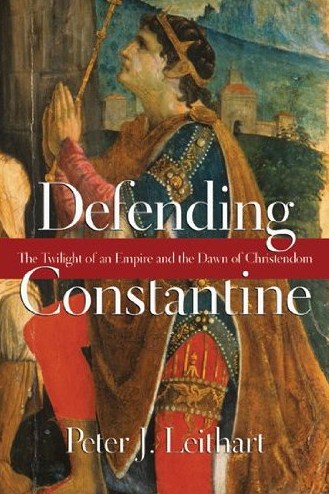
Defending Constantine - Dr. Peter Leithart


Defending Constantine: The Twilight of an Empire and the Dawn of Christendom
by Peter J. Leithart
IVP Academic 2010


Rating: 8
Readability: 7
Impact: 8


Read it Again: At least portions.
Recommend It: Yes.


What to Expect


Defending Constantine is organized somewhat like a backwards Against Christianity. The first portion sorts through history and what accounts we have of the times of the early church, before, after, and during the reign of Constantine.

The entire book is theologically grounded and continually shows the tension and relation of Church and State. Many portions read like an essay or thesis against writers and thinkers like John Howard Yoder. Other sections are simply history with thoughts from an open Bible.

Defending Constantine is a history lesson, argument, and theological discussion wrapped up in a fascinating character and time in history.
A few sections may take some persistance, but the whole book is well worth the read and is organized with typical Leithart clarity and infused with scattered humor.

My Squib


I didn't know near as much as I wanted to/needed to about this era of history, so I was delighted with this book.

The scale of research, quotes, and organization alone was an impressive feat. Dr. Leitart attacks hard questions and arguments while looking through a wide scope of history and constantly referring to the Bible.

I am perpetually confused about what the relation of church and state should be and he addresses this even more in Defending Constantine than in Against Christianity. 

The book gave an extended lesson on how theology, even minor ideas, affects the outworking of much of what we do. I found the discussion on pacifism particularly intriguing.


Dr. Leithart's arguments against John Howard Yoder are an interesting look into debate and thinking. By the end of the book, he has turned most of Yoder's arguments against Yoder himself.


This book was perfect for me on a number of levels, but it was well worth the time for the early church history alone.

Don't expect heroes to be perfect. But when imperfect people bow the knee to Christ, they can do great things...and who knows the consequences.

From the Book


"The church is a polity, and thus any ethical or political system that minimizes or marginalizes Jesus and his teaching hardly counts as Christian."


"In the end it all comes round to baptism, specifically to infant baptism. Rome was baptized in the fourth century. Eusebian hopes notwithstanding, it was not instantly transformed into a kingdom of heaven. It did not immediately become the city of God on earth. Baptism never does that. It is not meant to. Baptism sets a new trajectory, initiates a new beginning, but every beginning is the beginning of something. Through Constantine, Rome was baptized into a world without animal sacrifice and officially reognzized the true sacrificial city, the one community that does offer a foretaste of the final kingdom. All baptisms are infant baptisms. 

Friday, September 2, 2011

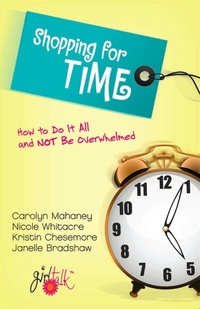
Shopping for Time - Carolyn Mahaney and Co.

Shopping for Time: How to Do It All and Not Be Overwhelmed by Carolyn Mahaney, Nicole Whitacre, Kristin Chesemore, and Janelle Bradshaw


Rating: 8
Readability: 8
Impact: 8


Read it Again: Already have. :-)
Recommend It: Yup


What to Expect


Carolyn Mahaney and daughters challenge the way we spend our time and how it shows our priorities while offering perspective, tips, and strategies to accomplish what we're really here for.


My Squib


I'd read this with my mom and sisters a few years ago, but thought it was time for a reread.

Shopping for Time does not simplify life to a 12 step guide towards the perfect existence. Instead, it explains five ideas to help the day fall into place and get what really matters DONE. Rise early, pursue Christ with Bible in hand, take time to plan (alone if necessary), evaluate and pursue proper relationships, and be productive in daily life by depending on Christ.

A great encouragement if you are feeling overwhelmed and stressed out. (Guilty as charged.) And it's short and direct enough that you won't even feel bad taking the time to read it. It's an even more beneficial break than Facebook. Promise. ;-)

The style is easy, humorous, and doesn't take itself to seriously.

From the Book


"In the end, our highest goal each day is not a flawless execution of our plans or increased productivity. It's our relationship with God, walking in dependence upon him throughout the day. We should not be more consumed with the completion of our to-do list than pleasing and glorifying our Savior. Whether we're sitting down to map out our day, simplifying our to-do list, or receiving an interruption as a 'sovereign delivery',  we must above all, plan to depend. 

Wednesday, August 24, 2011

Wise Words - Dr. Peter Leithart


Wise Words: Family Stories that bring the Proverbs to Life
by Peter Leithart

Canon Press (2003)


Rating: 8
Readability: 9
Impact: Very interesting look into this sort of writing...


Read it Again: Already have. :-)
Recommend It: Of course.


What to Expect

Simple stories that are grounded in a specific Proverb but build off much more Biblical symbolism and typology. Unpretentious. Good for all ages.

My Squib

This is, of course, a very different sort of read from Dr. Leithart, but still holds all the thought and honesty of his other books. He opens with a quote I am completely in love with--

"Stand fast! And keep your childishness.
Read all the pendant's creeds and strictures,
But don't believe in anything
That can't be told in colored pictures."
~G. K. Chesterton

Dr. Leithart holds true to this principle and does so beautifully in Wise Words.
I rationed this book because I didn't want it to be over. The stories are short, simple, playful, serious, and imperfect, but they will continue to roll around and grow in your noggin if you let them in.

From the Book

I had many favorites but "Ivy and the Prince" was near the top. The allegory aspect may or may not have made me bawl like a baby. :-P Quotes out of context might sound a bit strange, but this sentence was beautiful-- "Her heart broke with pain and joy and the terror of love."

Tuesday, August 23, 2011

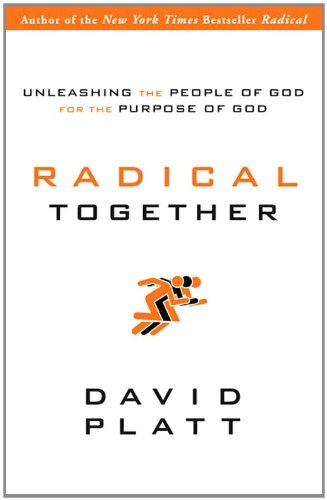
Radical Together - David Platt

Radical Together: Unleashing the People of God for the Purpose of God  by David Platt
Multnomah (2011)


Rating: 8
Readability: 8
Impact: 9


Read it Again: Yes.
Recommend It: Yes!


What to Expect

Pastor David Platt moves from his best selling book, Radical, focusing on our own ambitions and expectations, to Radical Together, a book that focuses on the position, responsibility, and power of a community of believers.

Radical Together is a call back to a Christ-centered vision for the Church--her energy, resources, and focus.

The book focuses on both home-based discipleship and missions abroad, in a manner modeled after the Gospel.

David Platt is direct and engaging. He doesn't smooth over the tough stuff. If you aren't prepared to be convicted or spend time in serious evaluation, don't read this book.


My Squib

Radical Together draws its arguments and conclusions from the character of God and the fallen state of Man. The Church is a body of sinful, messed up, complicated people...all wrong for this beautiful, momentous task, but together created for a weapon of victory.

We are called to be selfless followers of a self-centered God. He is not our slot machine. We are His servants. There is no greater joy than serving, glorifying, and enjoying Him as He has called us!

A book taking the Church this seriously is both refreshing and somewhat depressing... We've been doing a pretty rotten job.

Both of David Platt's books have given me a lot to think about and evaluate in my own priorities and attitudes. They are dangerous stuff. I'd love to talk to someone else who has read them and has another take.

They've been my book of choice to give away for 2011, but I guess I still haven't decided what I think on all their aspects. Time for a reread... If only there wasn't so much else to read too! ;-)

From the Book

"Are these steps radical in and of themselves? For some the answer has been yes. For others, the answer has been no. But for all, the aim has been to set our lives and our churches in motion by putting ourselves in positions where God can mold our hearts with his gracious Word for his glorious purpose."

Monday, August 22, 2011

The Radical Reformission - Mark Driscoll

The Radical Reformission: Reaching Out Without Selling Out by Mark Driscoll
Zondervan 2004


Rating: 6
Readability: 8 (as long as you don't mind PG-13 content)
Impact: 7


Read it Again: Probably not, but got some good notes.
Recommend It: Maybe


What to Expect

Pastor Mark Driscoll tries to answer the question of open evangelism without compromise. He raises a lot of excellent questions and brings interesting facts and observations into discussion, but failed to give me a satisfying answer to the challenge.

His style is interesting and engaging but he goes beyond PG-13 sometimes. The world is a sticky, dirty place, and I don't mined some honesty and grime if it's to a point. In Radical Reformission, it seems like Pastor Driscoll is simply being earthy to prove that Christians can be earthy.

Overall the book is a interesting look into evangelism and how we've tangled ourselves. There is certainly plenty of wisdom and insight anyone can learn from.

My Squib

This book was good. I guess my main beef with it was on its view on the relationship between Gospel, the Church, and culture. He starts the book with this diagram in the introduction--


I could be just grossly misunderstanding this, but he does try to explain. I think culture/church will always be a complicated problem, but it seems like culture should flow from the worship as community of believers. His general lack of acknowledgement of the Church was a strain for me through out the whole book.

Here is a very un-techno diagram of what seems like a more natural/direct order of things.


This is big topic and I certainly know I don't have the answer, but Radical Reformission raised some questions that fascinated me.

I thought the book lacked a big picture look. Some of his answers and the Bible interpretations seemed overly simplistic. People are complicated and some of his answers just didn't allow for that.

Partly this book is older...in his recent sermons and writing I see a different flavor that seems much more like the wizened sage who's been battered a bit more with the stupidity of human nature.

I have learned a lot from Mark Driscoll and he has a lot of wonderful, insightful things to say. But if you're looking for a book on this topic I would recommend Radical and Radical Together by David Platt before picking up Radical Reformission. Pastor Driscoll is a stronger on home-based missions, but I left unsatisfied and still puzzling about

From the Book

"God desires to bless all nations and cultures of the earth through us, and so he has sent us into exile in places and among peoples no less strange or lost than the Babylonians. I would never have chosen Seattle as my place of ministry because it is one of the most politically liberal, expensive yet uncharitable, and least churched yet most self-righteous cities in the nation. But as Paul said on Mars Hill, it is ultimately God who has chosen my birthday and address, placing me in Seattle today (Acts 17:26). Likewise, where you live is a place of Babylonian exile where God has placed you to be about reformission. And it is incumbent upon you to be wise, faithful, and fruitful, like Daniel was, so that the gospel can take root in your Babylonian soil."

Tuesday, August 16, 2011

The Persecutor - Sergei Kourdakov

The Persecutor by Sergei Kourdakov
Fleming H. Revell Co (1973)


Rating: 8
Readability: 8
Impact: 8


Read it Again: Yes
Recommend It: Yes. Everyone should read it.


What to Expect

Sergei Kourdakov grew up in communist Russia and became a KGB agent in the 1970s. He excelled in his position as passionate youth leader, student, and athlete by day and persecutor by night.

The Persecutor (also known as Forgive Me Natasha) is his story of disillusionment with the communist system and confusion with Believers in the face of death and hatred.

My Squib

The Persecutor has no shinny turns of phrase or literary warm fuzzies, but it's written directly and honestly. It doesn't pretend to be anything more than the story of one man among thousands who suffered in Russia. Painful, powerful, and beautiful.

Kourdakov was shot only months after the book was finished. This is his true testimony to the world and his petition for forgiveness to the many Believers he persecuted. His prose is full of honor and respect.

I was pathetically ignorant of this period of history, so I am so thankful to have read a memoir of this caliber.


What would I do in this situation? Every once in awhile this question terrifies me. Would I take it with grace? How mushy are we as American Christians? Do we remember that we stand on the blood of thousands and thousands of Believers who have taken death with bravery and grace? Around the world people continue to die because they will not let go of the Cross. Right now...as I type this. Do we remember?

Monday, May 2, 2011

Seeing and Savoring Jesus Christ - by John Piper


Seeing and Savoring Jesus Christ by John Piper
Crossway Books 2004


Rating:
6


In this book soley focused on knowing Jesus, John Piper studies various Scriptures and expounds on different names and attributes. He delves into the character of Christ as portrayed in the entire Bible while ending each chapter with a written prayer.


Seeing and Savoring Jesus Christ is an excellent and beautiful study that brings you straight to the core of the Gospel and will make you think about our awe-inspiring God.

Unfortunately, Piper doesn't give you much direct application, which could lead you to put the book down and continue life without much long-term impact. It would be good to ask, “What does this mean for me and my actions?” after every chapter.
Yes, we must see and savor the character of Christ, but what does that mean about our character? Do we act like our Savior is all powerful, wise, merciful, just, selfless, and most of all, alive and reigning?

Overall it is a helpful study, but certainly not all inclusive. I certainly have much I can learn from it...

Thanks for reading,
Miss Pickwickian

Friday, April 29, 2011

The Cross Centered Life - C. J. Mahaney


The Cross Centered Life: Keeping the Gospel the Main Thing by C. J. Mahaney with Kevin Meath
Multnomah 2002


Rating: 7


What is the center of your life? Does this show in how you live? In everything you do, think, and act?


C. J. Mahaney brings Christianity straight back to the cross.

We often ignore the wonder and finished work of Christ’s crucifixion and resurrection with its power and implications.
The Cross Centered Life is dedicated to shifting our focus back on that most important truth. The book starts by restating the obvious and then moves through chapters on the sin of legalism, the sin of holding onto our guilt and shame, our feelings vs. reality, and then offers practical ways to keep our thoughts and actions centered on Christ crucified and now risen!

The book is well organized and easy to read in very short moments or in one sitting. The style is clear and engaging, although I felt like he was a little overly imaginative and creative for the book he was trying to write.
I think he’s trying to reach a very broad audience, and I can see this being an excellent book for new as well as experienced Christians of a wide age range.

Thanks for reading,
Miss Pickwickian

Wednesday, April 27, 2011

The Charlatan's Boy - Jonathan Rogers


The Charlatan's Boy: A Novel by Jonathan Rogers
Waterbrook Press


Rating: 6


Jonathan Rogers has no qualms with creating his own intriguing words and grammar. The Charlatan's Boy is a lively, amusing, and somewhat rambling read from the first person perspective of an unusual orphan boy.


Grady has no idea where he comes from or belongs. The only man he knows is a the showman and scoundrel, Floyd. The two travel through country towns putting on a variety of absurd shows where Grady performs as a wild Feechie, an ugly boy, or a head bump translator. All the while, he tries to come to terms with his trade, lack of identity, and the unreliableness of the most prominent person in his life, Floyd.

The book's humor helps balance the lack of a constant driving force and rising action. Many of the chapters dealing with new people and places, the book never mentions again, which give it a short store or memoir type of feel. The ending seems a bit tidy and out of the blue, but is fairly satisfactory. At least Floyd shows his true colors very clearly and Grady is happy, even if it's all highly unlikely.

Jonathan Rogers is a creative and spicy author. I look forward to watching what he publishes in the future and hope for a little better structure and conclusion.

Thanks for reading,
Miss Pickwickian


Necessary Note: I received a free copy of this book from Waterbrook Press for this review.

Saturday, April 16, 2011

In which Erin makes me the perfect journal!


In case you didn't know already... I love Dietrich Bonhoeffer.

I'm not sure when we first met, but it was a long time ago.

I know he was iffy on some theology points and we don't know exactly where he landed, but he was extremely smart and knew how to write things that stick in my head. I just think he was amazing.


Awhile ago I approached Hesed Books and Gifts about sponsoring a giveaway. Not only has Erin donated two amazing journals coupled with gift cards for future giveaways, she custom made me this perfect journal!


This quote from Dietrich Bonhoeffer has always been a reminder to me-

When Christ calls a man, he bids him come and die.
~ From The Cost of Discipleship

Considering the life that Bonhoeffer lived and how he died, this is very powerful.

These journals are awesome. They make the perfect gifts for all sort of people. Their thin so they fit in my purse or in-between the crowded books on my desk. The paper doesn't have lines so I can write as well as diagram. :-)


It contains 20 blank pages (so 40 front and back), has rounded corners, and a cover of recycled content cardstock. The design and colors are awesome. It measures 4.25"x5.5 and has eyelets to attach gift tags, ribbon, or a lanyard to the outside.

What makes me just totally love this shop is the custom designing. I can't believe I actually have a Dietrich Bonhoeffer journal with my favorite quote! :-)
You can see Erin's already made journals here. They only cost $4.75. :-)

I'll be doing a Shakespeare and custom made C.S. Lewis journal giveaway from Hesed Books and Gifts soon. Each journal will also have a gift certificate to Erin's amazing shop.

Here are a couple more Dietrich Bonhoeffer quotes that have influenced me...

I've been thinking about this one a lot recently-

We have learned a bit too late in the day that action springs not from thought but from a readiness for responsibility.

~From Letters and Papers from Prison

I think that actually applies to a lot of life.

The believer is neither a pessimist nor an optimist. To be either is illusory. The believer sees reality not in a certain light but as it is and believes only in God and God's power towards all and overall that is seen.

~From No Rusty Swords

Thanks for reading,
Miss Pickwickian

Monday, April 11, 2011

God Is - by Doug Wilson


God Is: How Christianity Explains Everything by Douglas Wilson


A reply to Christopher Hitchens' God is not Great: How Religion Poisons Everything


A short, chapter-by-chapter response to Hitchens' book before their debates shown in Collision. It's an interesting look into organized thinking and gentlemanly, but firm, intense debate. ;-) It includes some good laughs...

Doug Wilson's responses are good for some mulling over, not just for arguing with an atheist. This portion really stuck with me--

"Sinners are guilty and all sinners must die. What the cross does is provide us with a way of dying, with resurrection as a promised consequence. Jesus did not die so that we might live. He died so that we might die; He lived so that we might live. This is our hope, and this is our glory. And God in His kindness has authorized His people to extend this offer--full of grace--to people like Christopher Hitchens."

Thanks for reading,
Miss Pickwickian

Thursday, March 24, 2011

Persuasions - Doug Wilson


Persuasions: A dream of reason meeting unbelief
by Douglas J. Wilson


Rating: 8
Readability: 9
Impact: 8


Read it Again: Already did...but probably will again. :-)
Recommend it: Yes!


Persuasions is an interesting glimpse into clear thinking, practical theology, and unapologetic conviction. Doug Wilson organizes his short book into fourteen chapters, each dealing with a different traveler and their conversation with Evangelist. The story form and dialogue make it an easy read, while getting a taste of the arguments of atheists, agnostics, feminists, and others. Wilson shows that life apart from God’s Word must borrow reasoning from that Word and ultimately undermine itself.

If we try to persuade belief in Christ on merely an emotional basis, we deserve to be laughed at. We must know that what we believe is true. Surely this is part of the meaning of 1 Peter 3:15. Persuasions is a tool towards that end.

Certainly an easy group-read, extra Bible time activity, highschool assignment, or quick individual read. It started some interesting discussion in our house.

Down-to-earth honesty that brings ideas we often think unimportant into the realm we think and breathe everyday.

I'm trying to teach myself to think clearly and this book was certainly a help in that direction.

From the Book

Because each chapter could stand alone, individual quotes don't give the big picture of the book.
Here is one from Evangelist that I thought was particularly interesting-

I reject everything that rebels against God--no matter how many footnotes or big words are contained in the rebellion. God has laid the wisdom of this world into the grave. Modern scholars are vainly trying to bring about a resurrection. It cannot be done.

Thanks for reading,
Miss Pickwickian

Friday, March 11, 2011

The Four - Peter J. Leithart


The Four: A Survey of the Gospels by Peter. J. Leithart
Canon Press 2010

Rating: 9
Readability: 8
Some of it might seem a bit slow when he's getting into scholars arguments on dating etc... Why can't biblical scholars just believe the Bible? Most of it is extremely interesting and it continues to get more and more exciting as the book progresses.
Impact: Very high, I hope.

Read it Again: Yes! Slower with my Bible, pen, and paper in hand.
Recommend it: Highly.


What to Expect

The Four is organized like A House for My Name with bite-sized portions followed by review and thought questions.

Leithart gives an excellent overview of what we commonly refer to as the "intertestamental period" and in the process, information on the prophets. He then dedicates a chapter to the four Gospels and how they relate and differ before going on to a full chapter on each individual book. As always his writing is clear and exciting and his Bible knowledge is staggering and inspiring.

My Squib

I have been so immersed in Old Testament books with this Ligonier course. This was really fun to read. I literally flipped out when I saw it was coming out last October. I'd just been griping that Leithart didn't have enough on the NT.

The introductory stuff on the history before the Gospels was especially good for me as I haven't heard much on that era. The way he pointed out the different thrusts of each book and how they related was excellent. I really felt like copying the whole book out in my "notes/quotes journal".

I had very high expectations and wasn't in the least disappointed. I only wish there was more...

From the Book

See this quote I posted earlier.

Okay...this is a long quote and I hope I'm not breaking any copyright laws, but this is simply awesome and should show you how much you need to read the book.. :-)

As Matthew tells the story, Israel's history is a story of a spurned husband who refuses to give up on His bride. His bride spurns Him and finds other husbands, but He woos her back. He is the relentless, pursuing Hound of Heaven.

That is the message of the final act of this romantic comedy. Yahweh comes in flesh; Israel's Father comes as Israel's Son, and He is rejected yet again. He is rejected more thoroughly than ever. Persecuting prophets is bad; killing God Himself is worse. But the resurrection shows that Israel's God will not let Israel have the final word. He will not let Israel's rejection stand. He keeps coming back, even after Israel thinks they have killed Him. Israel does her worst: Yahweh comes as man, and Israel kills Him. If this were not the gospel, it would be a horror story, because this God cannot be stopped, cannot be buried. He comes back, and back again, even from the grave.

This is the great good news, the unsettling gospel of God. Matthew's gospel reveals that God is love, and Matthew's gospel shows us what kind of love God is: He is relentless, faithful, persistent love.

Thanks for reading,
Miss Pickwickian

Wednesday, February 9, 2011

Against Christianity - Peter J. Leithart


Against Christianity by Peter J. Leithart
Canon Press 2003

Rating: 9
Readability: 7. I read it quickly and it's extremely interesting, but sometimes I really had to pause and think. This is mostly due to me, not the book. It is a little harder to grasp quickly than some of his other books.
Impact: 9 :-)

Recommend it: Yes!
Read it Again: Yes.


What to Expect

Leithart rejects anything we name with the name of Christ that is not a complete remaking of the world. A spiritual feeling of Christianity that adopts the world's vocabulary, marketing, values, etc. is the enemy of Christians.

Christianity is gnostic.
The Church can not be gnostic.
The Church is the new city, not ideas that sit under or even alongside the existing culture.

Against Christianity is divided in five sections: Against Christianity, Against Theology, Against Sacraments, Against Ethics, and For Constantine. Each section is divided into bite-sized, numbered ideas (similar to Deep Comedy).

Like several of Leithart's other books, he manages to leave you with a clear mission and beautiful portrayal of our living hope. It get's me high every time.

The book is excellent and even better during the second read.

My Squib

I'm pretty sure I'm not qualified to review this intelligently, but I'd be quite happy to jump up and down and tell you to read it. :-)

Compared with other Leithart books I've read, I did have to slow down a bit with this one, but it was well worth it.

I've been very blessed to grow up in a church culture where the ideas behind the book have been taught, but I've never thought about them so directly before. Some passages were very convicting and helped me to see some errors in my own thinking. It also helped me solidify ideas that were drifting around without an anchor.

I feel like the book should be required reading. :-)
I also think it's well worth the time if you are exposed to other books or lectures by Peter Leithart. It helped me understand his terminology better and just where he's coming from in general. All good things.

I feel slightly self-conscious using the word "Christianity" now... Not sure what to do with that.

The whole book is certainly worth reading again...and again. ;-)

Somewhere in the middle of reading this book and whatever else was coming in at the time, I came to a realization. Something I guess I've heard but haven't really taken into action. There is nothing to apologies for striving enthusiastically to be a Christian in everything. My identity is "follower of Christ". I don't need to apologies or dance around. This is who I am and it affects every area of life.

From the Book

Transformation of life, including social and political life, is not an "implication" of the gospel. That would suggest that the gospel is over "here," and that it has implications for life which are over "there." It would mean that the gospel is on the left hand, and that we can draw out the moral implications of the gospel on our right hand. Such a procedure is compatible with heresy of Christianity with its separation of "theology" and "practice," but it is not a biblical picture.
Transformation of life is not an implication of the gospel but inherent in the gospel, because the good news is about transformation of life.

The modern Church is in exile; we have chosen exile, and the LORD has delivered us to our desires. But we do not worship the God of permanent exile. We worship the God of exodus.
He calls us to faith, and that means renouncing Christianity and all its works and all its pomp. It means clinging to the gospel, believing the gospel, preaching the gospel, living the gospel as the CHurch, even to the shedding of blood."

Thanks for reading,
Miss Pickwickian

Tuesday, February 1, 2011

I Capture the Castle - Dodie Smith


I Capture the Castle by Dodie Smith
St. Martin's Griffin 1998
(originally published 1948)


Rating: 7
Readability: 8
Impact: Loved the style and gave me a fresh look at journaling and first person. Awesome.


Read it Again: Parts of it at least.
Recommend it: I think so...but portions of it are just weird.


What to Expect

A funny, quirky style mixed with the interesting story of a strange family and two girls' odd romances.

Has all the makings of something Gothic and than turns it into something absolutely fresh and funny. Doesn't take itself too seriously even though it often slips into something profound. :-)

The story itself is a little strange. The first half is much better than the second, although I loved the last chapter. There's certainly some questionable things going on.

My Squib

The style totally resonated with me. Loved it.

I thought Dodie Smith did an amazing job of portraying the feelings of a teenage girl (sometimes a bit too much...). Cassandra is lovable and believable. She really did an awesome job here.

Some of her other characters were a bit strange or caricatured, but it didn't bother me. It seemed to fit in with the journal style and Topaz was simply hilarious.

There were certainly things she could have left out, but over all it's just a fun romance. It would get a PG13 rating before you put in the fact that their step-mom likes to commune with nature (leaving her clothes behind).

Her outlook on Christianity is a little hard to understand. She kind of builds on it and Cassandra getting together and than abandons it. She kind of leaves you with faith as simply something to ease pain and not fully live (in sorrow or joy). Pretty lame there...

Over all, if your interested in writing, it's certainly worth it for the style.

From the Book

It's hard to take a bit out without giving away anything, but here's a paragraph--

I finish this entry sitting on the stairs. I think it worthy of note that I never felt happier in my life--despite sorrow for father, pity for Rose, embarrassment about Stephen's poetry and no justification for hope as regards our family's general outlook. Perhaps it is because I have satisfied my creative urge; or it may be due to the thought of eggs for tea.

Thanks for reading,
Miss Pickwickian